Showing posts with label GIRL POWER. Show all posts

Saturday, July 23, 2022

#ActuallyAutistic


Here’s what happened. 

Multiple people around me got diagnosed with ADHD, including one of my roommates. Watching their journeys, I saw a few things that I recognized. 

Object permanence problems. (If I can’t see a food item in the fridge, it does not exist. I have thrown away so many packages of cheese. And if I need to remember to bring something with me somewhere, I have to either leave myself a note or leave the item right by the door.) 

Bumping into things. All the time. My spatial awareness of my own body is shite. 

Hyperfixations. Having projects or TV shows or movies or hobbies that take up all of my mental time and energy for a significant period of time. Some could be considered specialized interests, since I’ve been obsessed with them for most of my life and have a considerable amount of knowledge about them. (Hey, ancient Egypt.) 

But as I learned more about ADHD, I kept bumping up against one particular idea: that people with ADHD often struggle with executive function. 
 
And I generally…don’t? When I’m in a bad depression dip, I struggle to function, but it’s not quite an executive function issue. It’s not that I have some block surrounding organization or task completion or even being overwhelmed. My block is surrounding energy. In fact, when people talk about how difficult it is to complete a task, I have a hard time understanding what they mean. You just…do it? 

So I was like, “Hey, internet, what has some of the symptoms of ADHD but you’re hella good at organizing things, breaking down a large task into smaller parts, and completing to do list items, and also were a weird kid who struggled with social cues?” 
 
Oh. 
 
Autism. The answer is autism, kids. 

So I had a crisis, because I couldn’t have autism. I hated math growing up, and I’m a deeply empathetic person who’s sensitive to the feelings of those around me, and I actually have lots of friends now, and I understand humor and metaphors. So there’s no way I could be autistic. 

And then I took the RAADS-r test and scored an 83. The minimum score for autism is 65. So I took another test from The Autism Research Centre in Canada, and scored a 30, which is at the low end of high risk. 

And then, based on the RAADS-r questions, I started really looking at myself, and who I was as a kid, and who I am now. A fearless moral inventory, if you will. 

And the truth is that I really was a pretty weird kid. I never quite fit in…I always felt different from other people, and most of the time, that was fine with me. But here is a short list of the ways I was weird, which are all also autistic traits: 
  • I was very very anxious about food. I was a very picky eater, refused to try new foods, and had an enormous irrational meltdown if someone tried to get me to eat something I didn’t like or hadn’t tried before. 
  • I often wore the exact same thing every day for days and days (and weeks?) on end. For like, a long time. For at least the first half of my freshman year of high school, I wore the same jeans, off-white textured top, and blue cardigan. Every day. 
  • I played imagination games (dress up, Barbies, dolls/stuffed animals, etc) for longer than average. (I think.) Until I was 14 or so. 
  • I refused to put my head underwater at the pool. I remember a swim teacher specifically giving me this note at the end of several weeks. She might have even bribed me with candy? I also remember having similar anxieties about having my hair washed. 
  • Hygiene in general was difficult, because of what I now understand to be sensory issues. I often refused to brush my hair, and would get these awful, matted rat’s nests in my hair as a result. I struggled with brushing my teeth, especially spitting the toothpaste out. 
  • In general, I struggled a lot socially. Some of that also probably had to do with the hygiene and outfit things I just listed, but even aside from that, I often just couldn’t connect to my peers. I had a hard time accessing what was “cool” or “popular.” It all seemed so arbitrary to me, and I couldn’t keep track of it, and couldn’t figure out what was important or why. I was teased and picked on, sometimes by people whom I had thought were my friends. I often had a sense of having missed something in social interactions…I could feel the temperature change in a conversation, but I wouldn’t know why or what had happened. I disappeared into books for much of my childhood, and preferred to spend recess in elementary school making daisy chains by myself to playing with my peers. Freshman year of high school, I often sat in the hallway above the auditorium and read books during lunch. Granted, I wasn’t a complete loner. I did have friends and meaningful connections, but for a long time, they were all just as weird (and probably as neurodivergent) as I was. 
 
And you guys. Most of these things were going on well into my teenage years. It took me finally getting into theatre my SOPHOMORE YEAR IN HIGH SCHOOL to feel like I could finally start to fit in with my fellow humans. 
 
(I have a theory about why—I think it’s because theatre kids are VERY EXPRESSIVE and direct, and I could easily navigate conversations that were with people who were weirdos but also clearly expressing emotions in very dramatic ways. Like, weirdness was embraced among theatre kids. And everyone was so dramatic, which meant social interactions were less subtle. And scripts gave me parameters to interact within. I could make strong individual choices, but there was always a “right thing” I could say when following a script onstage. It was enough to give me confidence to develop those skills more as a person offstage.) 
 
But you grew out of all of it, right, Liz? 
 
Here is a short list of the ways I continue to be weird, most of them starting in childhood but continuing on today, all of which are really common traits among those with autism: 
  • I’m still a picky eater, tbh. Spicy foods make me feel like I’m dying, and new foods give me anxiety, and if a food has a texture I dislike, it makes me gag. 
  • My most prevalent stim is twirling my hair, followed closely by picking at my nails and swaying while standing. I often use fidget toys during movies or plays to keep myself from stimming hard in other ways that are more damaging (like making my cuticles bloody with picking at them). 
  • Little spoons only. I am picky about silverware and dishes in general. They must be the right shape, weight, material, etc. 
  • Form follows function when it comes to clothing. If it’s not comfortable, I cannot stand to wear it. I often cut tags out of my shirts, and have occasionally cut collars on t-shirts to be lower so that they weren’t as close to my neck. I’ve been known to trim scratchy inner hems. I dislike wearing pants (as any of my previous roommates can attest), and I dislike wearing shoes (as anyone who knows me can attest). 
  • Eye contact actually doesn’t come easily to me. It’s much easier onstage, but in real life, I have to remind myself to consciously do it during other interactions. I also have to consciously remind myself of the rules of casual conversations, especially if it’s with someone I don’t know super well. (If they ask you how your day was, ask them the same thing back. Conversation is reciprocal. And also, not everyone is interested in the random trivial fact you learned on a podcast today.) 
  • In fact, I uh…I rehearse social interactions ahead of time. For a long time, one of my deepest secrets was that I’ve rehearsed jokes or stories or conversation bits before telling them for like, most of my life. I’m only comfortable sharing this now because I’ve learned that lots of other people do it. 
  • I have a list in my phone of conversation starters and reminders to help me navigate social situations where I don’t know people as well. Topics to bring up, questions to ask, etc. 
  • I’m easily overwhelmed in loud, crowded areas. When I’m sitting in a theatre before a show (as an audience member), I usually have to put in headphones and play white noise to keep me from like, freaking out. I’ve also used headphones and white noise in grocery stores, on public transportation, and in airports. 
  • Repeated soft touch on one part of my skin sometimes feels actually and literally painful. One or two brushes of someone’s fingers over one part of my arm = lovely. Repeated touch of the same kind in the same place = torture. 
  • Spontaneous social interactions are hard for me. 99% of the time, I need a day to sort of emotionally prepare. It’s not that I don’t love people, it’s just that 1, the disruption in my plan for the day is difficult, and 2, social interactions take a lot of work for me and it’s hard to jump in really quickly. 
  • Walking on my tiptoes. I don’t do this one quite as much nowadays, but I often walk on just the balls of my feet. 
  • Always using movie/YouTube/TV/TikTok/etc quotes in conversations. (Or, more often, thinking them and not saying them, because if people don’t know the reference, it often gets in the way of actually connecting with other people, which is the goal of conversation. And also because I don’t know how to explain that the thing I just said is a reference to the blooper reel from an early 2000s British sitcom that I’ve watched dozens of times with my sister.) 
 
There are also a few things that could be classified as just kind of quirky personality traits, but I see them in a new autistic light nowadays. My deep love for forms, spreadsheets, taxes, and organizational documents of any kind. The meticulous tidiness of my room and/or desk. The game I play in my head when I’m buying something less than $20, when I try to think of a historical event that took place in the year of the total. ($14.92 = Columbus sailed the ocean blue.) 
 
I also have a few common morbidities with autism. I have an auditory processing disorder and misophonia. And hooo, boy, do I have a history of anxiety and depression. 
 
And each of these things on their own are kind of just quirky personality things, but put altogether, it looks a hell of a lot like autism. 

(Okay, quick note: Most of what I've described would have been classified in the past as Asperger's Syndrome, which is now recognized as just part of the autism spectrum. The autism spectrum doesn't mean every person is somewhere on a scale from "not austic at all" to "totally autistic." The autism spectrum means that either you're autistic or you're not, but if you are, there are a spectrum of experiences and supports needed. I have low to medium support needs, where someone else may have more support needs.)
 
I’m a little uncomfortable calling myself autistic without an “official diagnosis.” But it’s not like I took one BuzzFeed quiz and decided I was autistic. I’ve spent months reading articles, visiting websites, using diagnostic tools like the RAADS-r test, listening to other adult women with autism, and speaking about it with other autistic folks. 
 
I’m currently in the process of seeking a formal diagnosis, which is…difficult. One of the clinics I called is booked until the year 2024. And women who can mask their symptoms and have lower support needs are often dismissed or overlooked, so I want to find someone who specializes in autism in adult women, which is not easy. I also understand that if I am not diagnosed as autistic, that could also be accurate. It just…it really seems like an accurate diagnosis to me. 
 
When I told my roommate some of these things that I did and still do, she looked at me incredulously and asked “How did you not know?!” And I replied that I didn’t know because I’ve never been in anyone else’s head! I’ve only been in mine! And also I was born in 1985 and getting an autism diagnosis as a girl in the 1990s was unheard of! 
 
So now, at age 36, I’m navigating the very high possibility that I’m a little bit autistic. My therapist pointed out that I managed to white-knuckle my way through a lot of distress in order to have connection with my fellow human beings, and that I was able to find some helpful coping mechanisms just on my own. That’s worth celebrating. 
 
Does this change anything about my life now? Not really. 
 
Just kidding, I’ve been going through ongoing loops of identity crises, research and self-education, and re-evaluating every single aspect of my life. This also means that all of the social confidence I’ve developed over the last 20 years has frayed at the edges a bit. By my senior year of high school, I’d become confident enough that I could enter into social interactions with very little anxiety. A lot of that anxiety came back after getting divorced in 2017, but nowadays it’s like…middle school level social anxiety, 60% of the time. I’m hyper aware of how I act in every interaction I have with other human beings, while it’s happening, which means that the interaction itself sometimes gets weird because I’m aware of how I act and it’s just a strange, endless loop. 
 
Shout out to anyone who has become friends with me over the past six months or so. 
 
“But Liz, you don’t seem autistic at all!” Maybe not on the outside, I don’t. And maybe not to you. That’s probably because I’ve spent the last 20 years learning and practicing normalcy really really hard. (Also, I thought the same thing but then I learned more about autism.) 
 
But here are a few of the good things that have come from this journey. 
 
I have enormous compassion for little Liz. That weird girl with un-brushed hair who was reading by herself throughout school was doing the best she could with what she had, and no one had the tools or knowledge to help her navigate a world that presented challenges for her. I see her isolation and confusion and pain in a different light, and now I can reach back through time and offer so much love and patience to that young girl. 
 
And some of that sense of isolation has been lifted as well. When I first began my journey with a possible autism diagnosis, I felt this strange sense that the diagnosis would erase my experiences growing up. Like if I was autistic, I was just like a bunch of other people, instead of an unusual, otherworldly creature who single-handedly figured out how to connect to others on her own terms and was more highly evolved than her peers in middle school. I had come to embrace my strangeness as something beautiful that I then grew out of. But nowadays, I see things differently. I can still be an unusual, otherworldly creature…it’s just that now I don’t have to be alone in it. I get to keep the strangeness, but let go of the isolation. (I also now understand that I’m no better or worse than my peers…we just had different tools and experiences.) 
 
And I’ve seen this as an opportunity to embrace my strangeness and my needs. I follow a couple on TikTok who both have autism, and they posted a video about how one day, they just decided to be themselves, in all their strangeness. To not hide their wild, unusual quirks, and to live bravely as exactly who they are. Hearing this didn’t change a lot about my behavior, but it lifted a lot of the shame and embarrassment I had about my behavior. Okay, so I need some time to prep for social interactions! That’s a legitimate need and not a character flaw. So I’m a picky eater. So certain kinds of touch are painful to me. So I need headphones to help me not meltdown in large, noisy crowds. ALL OF THAT IS FINE. I’m allowed to have those needs and to speak them and to do what I can to meet them. 
 
And that’s actually true whether or not I get an official autism diagnosis from a licensed professional. That’s true of all of us. We’re allowed to give ourselves tools to navigate the things in the world that don’t work for us. We’re allowed to look back in time on our younger selves with compassion. We’re allowed to like what we like and dislike what we dislike and be our weirdest selves. 
 
Connection with our fellow human beings is still possible when we do those things. And the more we are our truest selves, the more authentic that connection will be.

Sunday, November 7, 2021

Writing Elsewhere

Hello, my friends! 

Things have been a bit quiet here on the blog lately, and I just wanted to post real quick to excuse and justify my absence. 

RJ and I are continuing our Sister Blog Challenge, but we're on a brief hiatus while we focus on other projects. I'm doing NaNoWriMo (again) this year, so for the month of November, I'll be focused on that. And during October, I spent a lot of time editing old works and submitting them for publication and applying for writer residencies and doing all kinds of other writerly things. 

But if you're craving some Liz writing, never fear, because one of my essays got accepted for publication! You can read my creative non-fiction piece, "The Goddamn Miracles of Nature," on the Sad Girls Club Literary Blog by clicking here. (While based on truth, names have been changed to protect the innocent and guilty alike.) 

Happy reading and writing, loves.

Monday, September 13, 2021

What I Learned from (Almost) Doing 50 Hours of Yoga in a Year


Actually, I won’t be able to tell you what I learned doing 50 hours of yoga. Because I didn’t do 50 hours. I did do 30 hours and 36 minutes, though, and I learned plenty from that! 

I set this as my birthday goal last year, but didn’t really post anything about it here like I usually do. It somehow felt more private, so I just quietly made my spreadsheet and paid for the premium version of my yoga app and set up a reminder in my phone to do yoga every other day, even if it was only for 10 minutes. I chose a goal of 50 hours because it worked out to be about an hour a week, or 20 minutes three times a week, or even 10 minutes six times a week. Not so much as to be overwhelming, but enough to make a difference. 

I had visions of being so flexible and strong at the end of this journey. I was going to be able to do headstands. I was going to be able to lift my leg straight up into the air, knee by my ear, my eyes gazing out serenely. I was going to have clearly defined abs and no double chin and I was going to be Zen as f*ck. 

Surprise: none of that happened. I am not really any stronger or more flexible than I was a year ago. And honestly, I don’t know if I would have been even if I had made it to 50 hours. But it was still worth doing.  

Because it sustained me. It kept me grounded through an ongoing pandemic, through a breakup, through cancelled shows and new jobs and stressful days and lonely nights. 

Most of the time, it was me and my app, my iPad propped in front of me in my room, my yoga mat unrolled in the space between my bed and desk. A few times, I joined a virtual yoga class, including one instance where I was the only student. I was always a little wary at the beginning of a formal class—did I really have an hour to give to this? And I always did. 

There were times when I dreaded, absolutely DREADED, doing yoga. When the task felt so heavy that it seemed to pull the rest of my to do list down, a ball and chain to my day.  Sometimes I just crossed it off the list without doing it. I just couldn’t bring myself to “show up at the mat” or whatever. But sometimes I showed up anyway, teeth gritted, until they weren’t gritted anymore. 

There were times when it was a desperately needed respite. When my mind was going 10 million miles a minute, when my whole body felt twitchy with the frantic need to ACCOMPLISH ACCOMPLISH ACCOMPLISH. When it took putting everything else aside and just breathing for one goddamn minute to help me get to sleep. 

There were times when I felt luxuriously glad to be doing yoga. When I moved into wide child’s pose with the kind of sigh that’s usually reserved for slipping into a hot bath. When that “Zen as f*ck” feeling settled into my spine with ease and I felt at home in my body. 

And there were times when I sobbed my way through poses. It happened a lot after my breakup in November. I would be going through my day with a background note of sadness, and then I’d move into some pose and it would all come rushing out. Like all the sorrow I was carrying was waiting for some kind of release. I don’t know what I would have done with all of that ache if I didn’t have yoga. 

I had weeks when I was unrolling the mat every single day. And then weeks where it lay completely untouched. It’s still that way--inconsistent. But even if the habit hasn’t taken hold exactly, I still feel the place that yoga has taken up in my life. Now, I can sense when I’m feeling a little tangled—emotionally or physically. I can feel when I need the slow untangling that yoga brings me. I’ve come to accept that I don’t need the leggings, I don’t need the classes (although I do like them!), I don’t need to do this for an hour every day, or even for an hour at a time. 25-minute increments still settle and untangle and strengthen me. 

There’s often a sort of self-righteous evangelism that comes with yoga. At least that’s how I interpreted it from most of social media. A lot of promises of it changing my life. It takes a certain level of privilege to be able to make yoga practice a part of your life. I used to get the impression that most yoga classes were filled with skinny white women who can afford $70 leggings. Which is sometimes true. But I have discovered spaces where all are welcome, and found a home on my mat that I didn't know was waiting for me. 

And now here’s the thing: I’m becoming a bit of a yoga evangelist myself. I hope I’m not coming across as self-righteous about it, but I've learned that yoga really is for everyone. Rich, poor, fat, skinny, cisgender, transgender, any and all races and abilities. Is your stomach getting in the way of doing child’s pose? Just modify it to wide child’s pose. Can’t afford classes or a studio membership? Find a free guided class on YouTube (there are hundreds). Don’t have an hour to give to your practice? Just do 10 minutes. Can’t touch your toes? Touch your knees. 

It sounds cheesy and evangelical and unrealistic, but I've come to believe that yoga really doesn't ask anything of you except showing up. And I'm grateful for what I found as I showed up this past year. I don't think I'll stop. 

Monday, August 2, 2021

Loving Our (Imperfect) Bodies

DISCLAIMER: I am not a health professional, for mental or physical health. I have done research and am providing relevant links, and I'm also experienced in advocacy and non-violent communication, which is really the focus of this blog. 

CONTENT WARNING: This blog contains frank discussions of body image and disordered eating, including examples of harmful things that are sometimes said about bodies and examples of negative inner monologues. I invite readers to practice self-care and discretion in reading, and offer the option of skipping the examples written in orange text

Image: A dim picture of an empty dressing room, with lighted mirrors.
(via Travel Salem on Flickr

Hello my friends! Before I start this blog, I want to be transparent about the fact that for most of my life, I've been thin. My body has grown somewhat in the last several years, and nowadays I've got a bigger and softer tummy and a proper double chin. But I haven't personally experienced a lot of fatphobia or disordered eating or body image issues. This makes it easy for me to stand up and say "Hey, let's all love our bodies!" with very little baggage. But the amount of baggage I have or don't have doesn't have anything to do with my willpower or character. I just got lucky. I won a genetic lottery and got a body type that happens to be valued in my society and a family that doesn't have too many issues around body image. All of us humans have grown up in this culture, and all of us have internalized messages about fat, about age, about appearance. No one should be shamed for how much those messages affect them. For all my positive body talk, I also still have plenty of moments when those messages get to me, too. This blog entry is about why I do my best to consciously undermine those messages, and some practical ideas about how to do it. It's a skill that has to be learned and practiced. 

So! 

Now that more people are vaccinated (for the love of Osiris, if you can get vaccinated but haven't yet, PLEASE GET VACCINATED), we have more opportunities to do live theatre safely! And with that comes something I had literally completely forgotten about: the negative body talk that gets thrown around in women’s dressing rooms. 

I don’t know what happens in men’s dressing rooms, and it’s been a while since I’ve been in a universal dressing room. But I’d like to invite everyone, regardless of the dressing rooms you’re in, to move away from this kind of talk. The last year and a half has further radicalized me into working for all kinds of equity and compassion, and the dressing room is one place where I can do that work. Come join me! 

WHAT IT IS

Negative body talk is any negative comment about your own body, someone else’s body, or bodies in general. It may include comments about weight, shape, age, or appearance. Sometimes negative body talk comes in sneaky forms, like praising people for weight loss, or assigning moral value to certain foods. 

Here are a few examples: 

  • “Ugh, this costume makes my butt look huge.” 
  • “These crow’s feet around my eyes are driving me crazy.” 
  • “I was so bad today. I ate like five cookies.” 
  • “Okay, time to put on makeup. Because no one wants to see this face without makeup.” 
  • “I’m gonna have to go to the gym for an extra hour to work off that lunch.” 
  • “I hate having such tiny boobs!” 
  • “I felt so bad for him, trying to do that lift with her.” 
  • “You’ve lost so much weight! You look amazing!” 
  • “Time to put on my Spanx. Gotta tuck all of these saggy bits in.”
  • “These gray hairs look just awful.”  

WHY IT’S IMPORTANT TO SHIFT AWAY FROM IT

(My radicalization is gonna show here…) 

Negative body talk upholds the patriarchy

It’s the patriarchy that says “women are valuable because of their looks.” It’s the patriarchy that says “Men should look a certain way to get women to date them, because that’s where men get their value from.” It’s the patriarchy that says that women’s jobs are to be ornamental, decorative, and make others comfortable. It’s the patriarchy that makes no room for queerness or anything outside of the gender binary. It’s the patriarchy that says only pretty people can be romantic leads. It's the patriarchy that says women's value goes down as they get older. And there’s no inherent truth to any of it. It’s what society teaches us, but we can decide to disregard it. And as more of us disregard it, the less power it has. 

Negative body talk perpetuates the toxic aspects of capitalism

Think about how much money we spend trying to change how we look. I’m all for cool haircuts and tattoos and piercings and sunscreen and yoga studios—those things help us express and care for ourselves. But the only reason women shave their legs is because some guy in the 1920s wanted to sell us razors. The only reason we have so many diet programs is because people want to make money off diet programs. Even though none of them demonstrably work long-term and restrictive eating is always harmful. (Check out The F*ck It Diet for one resource on this.) The diet industry makes an estimated $60 billion a year. Imagine how much good that money could do if we spent it elsewhere. On small businesses. On bail funds. Or hell, on our f*cking bills. And don’t even get me started on the “pink tax.”

Negative body talk is often deeply rooted in racism

This is way complex, and I’m not the best person to speak on this, and many others have spoken about this more eloquently than I have. (Check out this interview with Sabrina Strings on NPR for one example.) But the idea that “thin is the only and best way to be beautiful” is an extraordinarily Western idea, based on white ideals that attempt to separate “superior” bodies from “inferior” bodies. The beauty ideals of other cultures are all so radically different…if we say “Well, being thin and young are the ONLY ways to be beautiful” we’re saying “White colonial ideals of beauty are the only valuable ones.” (Also, your value as a human being doesn’t have anything to do with how you look ANYWAY.) 

Negative body talk perpetuates the fatphobia that plagues the entertainment industry

There is literally no reason for actors to be thin. Because we use our bodies to tell stories, it’s helpful if our bodies are strong and healthy. But the lie that we’ve been fed for so many decades and from so many sources is that fat = unhealthy. And it’s just not…true. (Check out Health At Every Size to learn more). Health can be measured in a few different ways, but generally speaking, the actual science says that weight is not an accurate predictor of health. Lizzo can do cardio while singing and playing the flute for hours at a time in heels, night after night, for months on end. And have you seen Olympic weight-lifters? And also, the BMI is racist and completely useless and was never intended to measure health. So if you’re ACTUALLY worried about health, you don’t need to worry about weight. And as far as storytelling goes, there’s no reason we can’t have a fat Juliet on stage. A fat Elle Woods. A fat Hedda Gabler. LITERALLY NO REASON. If being thin doesn’t mean being healthy, and if you don’t have to be thin to play certain roles, then there’s literally no reason to push ourselves (or each other) to be thin. 

Negative body talk harms those with body image issues and disordered eating

It's difficult to get really accurate statistics, but eating disorders affect AT LEAST 9% of the population. So if you're in a room with 10 people, it's highly likely that at least one of them has experienced some kind of eating disorder, and even likelier that more people in the room have a difficult relationship with food or body image (if not all of them/us). When we make comments about our own weight, or the weight of others, we're adding our voices to the chorus of already loud voices saying "you're not thin enough" or "you'll only be loved if you're thin" or "you're not worthy of love unless you're thin." This is also why it's powerful to not compliment people about weight loss. I personally have multiple friends who have shared that compliments on their weight loss caused their eating disorder to deepen. Or perhaps their weight loss was because of another health issue, and the compliment made their pain feel invisible. In both cases, they were being rewarded with love and acceptance in times when they were very ill. I want to live in a world where we give people love and acceptance regardless of their weight. 


HOW TO UNDERMINE NEGATIVE BODY TALK IN THEATRE DRESSING ROOMS 

(and any other rooms, really)

Okay, so if you're on board with moving away from the negative body talk that perpetuates the patriarchy, toxic capitalism, racism, and myths about health, here are a few ideas of how to do it. 

  1. Aggressively compliment yourself. Look at yourself in the full-length mirror and smile at what you see. Exclaim with ecstasy. “Are you seeing this?! Look at these thighs! Look at these curves! Man, I love this gorgeous tummy.” Grab handfuls of your body and jiggle it with joy.
  2. Abstain from the “script” when someone says something disparaging about their own appearance. When one person says “Ugh, I hate how this makes my butt look!” the expected response is either “No, it looks great!” or “Well, MY costume makes my tummy look huge.” Both of those responses reinforce the idea that appearance = worth. Which is completely false. Speak up, or change the subject, or abstain. 
  3. Give specific compliments that don’t have to do with size. These compliments can have to do with appearance, but think of it as praising the way you’d praise a painting. (“You have such great eyebrows.” “You have such lovely hands.” “Look at your beautiful elegant feet!”) You can also compliment things that don’t have to do with appearance at all, like talent or smarts or interpersonal skills. 
  4. Respond to negative body talk with “That’s the patriarchy talking!” or another quippy one-liner of your choice. 
  5. Post body positivity quotes/images by the mirror/on the walls. A few of my favorites include "Love Your Tree" from Eve Ensler's The Good Body, some variation of this popular sticker, or this one, and this cross-stitch from my own Etsy shop (shameless plug).
  6. Respond with a simple “Hey, this kind of negative body talk isn’t okay with me. Could we please keep it out of this space?” 
  7. If the costumes/time period of the show allows, refuse to wear Spanx or other shape wear. 
  8. Invite people to explore the ideas behind the fatphobic comment. “Hey, have you ever thought about where those ideas come from?” (This can also be done more pointedly, in the form of “Explain what you mean by that?”)
  9. Speak frankly and matter-of-factly about your own body to the costume team (“These jeans are too small for my belly.” “If I wear this skirt, can I also get something to wear underneath so that my thighs don’t get irritated from rubbing together?”)
  10. Respond with “Hey, friends. Someone recently pointed out to me that this kind of negative body talk can be rough for folks with eating disorders. So because we never know what the people in the dressing room are going through, I’ve been trying to just refrain from any kind of negative body talk in every dressing room I’m in. Would it be cool if we did that in here?” 
  11. Sometimes negative body talk is an attempt to bond with those around us. The desire to connect to our fellow humans is deep and primal! (This is often what's going on when people are following the "script" mentioned earlier in #2.) So work on finding other ways to connect. Tell a funny story about your day, ask people what their favorite part of their day was, bring up an interesting article or YouTube video you recently read, or ask any of these conversation starters. (I always love hearing about people's journeys, so I like to ask "How did you get into theatre?") 
If you have other ideas, feel free to share them in the comments! Now go forth, and practice showing love to your beautiful, imperfect body and help others love theirs! 


Monday, June 15, 2020

You can't choose your race, but you can choose your class


Welcome to the campaign!*

We're playing a long-term game of Dungeons and Dragons here, and if you're new, there are a few things you should know. 

First, we have to function as though there's no Dungeon Master. (Or if there is, we don’t know who they are, but that gets into a whole ‘nother thing, so.) We’re all just going for it with the information we have. 

Second of all, we’re a big group of adventurers with different priorities, but in general, we’re fighting for social justice. We often come together to work on a specific campaign or battle. (For example, right now, in June of 2020, a big group of us is focusing on racial justice.) 

Third of all, unlike real DnD, you don’t have to stick with one class if you don’t want to. You can choose a different class each day, or overlap which class you’re a part of at any given moment. 

Okay! Ready to join? Here are the classes you can choose from: 

Fighters
Probably the largest and most visible class. These are the folks who march, carry signs, attend rallies, who are vocal on social media. 

Barbarians 
Warriors whose rage fuels them to (often violent) action. Throwers of bricks, topplers of statues, and painters of graffiti. They primarily fight for causes by disrupting the economy. These folks are definitely valuable to any cause, although some argue that too many on your team can become a liability. 

Monks and Paladins 
These folks focus on the spiritual and emotional aspects of the fight. These are the psychologists, the writers, the podcasters, and the friends reminding you that it’s okay to take a break. They provide a good balance for the fighters and barbarians. 

Bards 
The artists who use their art to critique the social order and provide hope for those fighting for change. Singers and songwriters, painters and other visual artists, theatre companies, TV and filmmakers, and creative writers. 

Clerics and Druids 
The healers and suppliers. They support the fighters during rallies and protests by providing medical care, food and water, transportation, and protection. This can sometimes be a dangerous job, but their involvement makes a huge difference at large protests. They’re the ones with first aid kits and bottles of water.

Rangers 
These folks are fighting on the fringes, having tough conversations with friends, family members, and acquaintances. Rather than participating directly in rallies and protests, they work to challenge the status quo wherever they are. This work isn’t as visible, but it’s deeply meaningful, and crucial to any social justice movement. 

Rogues 
The folks who use subversive tactics to fight against “enemies” of the movement. The internet group Anonymous is the perfect example. Standard tactics include things like hacking social media hashtags (like when KPop fans started using #WhiteLivesMatter to flood social media with KPop instead of white supremacy), crashing websites, sending memes to surveillance apps/sites to drown out any actual surveillance, and doing otherwise generally “legal” activity to stop immoral activity. 

Casters and Support Casters: Sorcerers, Warlocks, and Wizards 
These folks take direct action through donating, calling representatives, showing up at government meetings, voting, drafting letters, etc. These folks do the work “on the ground” even when there isn’t a protest or news story. Consistent ongoing work is key here, and it’s often most effective when you prepare a specific spell to utilize. 

Monday, January 27, 2020

It's Gonna Be Okay

There are so many things I want to write about. Kathleen and her memorial, opening night of Safe, thoughts on loneliness and friendship and love and illness and grief and self-esteem and romance. But every time I try, my psyche is like NOPE. So I’ll just have to let those things out slowly I think—just let them grow until they’re ready to be set down fully formed, or else put them down a little bit at a time.

So instead, I’m going to write a bit of encouragement to myself. A short imagined letter from the future Liz. If I’m continuing the growth metaphor from above, consider this the Miracle-Gro. (Or maybe this is an oblique way to write about some of those things I listed after all.)

Dear Liz,

It’s okay to feel grief. It’s okay to not “handle it well” and to accidentally fall short while you’re trying to process your sadness and fear. Grief creates a fog that sometimes you simply must walk through. You’re doing your best, and it’s going to be okay.

I know you’ve got the blues lately. It’s partly just January. Keep going on walks—I know you never feel like it, but you can handle the cold for 20 minutes, and those 20 minutes of walking make all the difference in the world to your mental health. You’re always glad you went, even if you never feel like going. Take naps if you need to. Be compassionate to yourself.

I know you may feel lonely lately. In your efforts to be professional as a director, you’ve put up a few walls between you and the cast and crew. In your efforts to protect Patrick from your own sadness, you’ve put some distance between you. And after Kathleen’s memorial, it was hard to leave Medford and Beckah and everyone behind—all of that love felt blinding and you still ache with it. But it will be okay. You are loved and loveable, even in your grief and sadness and confusion.

I know you haven’t felt very pretty lately. That’s okay. We all have those phases. So you’re fatter than you used to be and your hair is kind of at an in-between stage and your body hair is doing weird things lately. You still rock those curves, girl. Your eyes still sparkle, you beautiful soul. Give yourself a pedicure and a face mask just because it feels good. Stand in a hot shower with your beautiful body just because it feels good. “Pretty” isn’t objective. You’ll find it in yourself again eventually.

I know you’re dreading that audition on Wednesday. But I promise, it will be fine. You dread every single audition you ever do, and then you survive it and sometimes you even get to do a show afterwards. You have nothing to lose in doing this audition. The worst that could happen is they could say no, and if you do get cast and are overwhelmed by scheduling conflicts and other challenges, you can decline. It’s good to just practice auditioning, if anything.

I know that there are a lot of things that just feel uncertain right now. And you can look for guidance in tarot cards and universe splitter apps and self-help books, but sometimes you have to just embrace the uncertainty. You can embrace the age-old wisdom of that damned Serenity Prayer, which is so trite as to be cloying but is nevertheless one of the truest prayers ever written. You can accept the things you cannot change, change the things you can, and be wise enough to know the difference. Trust your intuition. It hasn’t failed you yet. You are a divine being navigating a beautiful world where you can grow and learn and give and heal. Trust that your journey is perfect exactly as it is. Let yourself be carried where you need to be carried.

And to give you some perspective on the goodness you do get to experience, here are a few things to give you hope and happiness. Between your tax return and your savings, you’ll be able to make a down payment on a car in the next few weeks…one that gets better than 18 mpg. Aaaaand you’ll be able to start saving for a bike soon too, which for short distances will be better for your wallet, your body, and the earth. In two weeks, you’ll be in Disneyland with Beckah and Mom and Ray. You have wonderful roommates and a wonderful boyfriend and a wonderful family and wonderful friends.

It’s gonna be okay. Better than that…it’s gonna be beautiful. It already is.

Tuesday, March 19, 2019

Mondays


9 am. I was supposed to get up at 8:15. Okay, new plan: I can rush my shower, put on half of my makeup at home, then put the other half on at work before driving to the audition. Do I have food at home? I grab the last blueberry muffin.

10 am. I also have a protein shake at work. I’m five minutes late, but it’s not the end of the world. P sends me a thoughtful text. Thank goddess for this man. I remember that I’m supposed to send out that Etsy order, which I left at home. Okay, new plan: I can print the shipping label here at work, then take it home and put it on the package.

11 am. Checks at work are signed and sent out. I need to pay two bills online, now that I’ve been paid, but it will have to wait until later tonight. Oh! “The Fantasticks!” Luisa’s monologue would be good for that audition B was asking about. I’ll message him. I step into the upstairs bathroom, layer on foundation, blush, lipstick. Review the lines. “You don’t have to worry about anything else right now,” I tell myself. “Just get to the audition. Nothing else. Just do that one thing.” Traffic to Lehi is light. When I get to the audition, the office suite I’m looking for takes up the whole floor. The iMacs at the front desk are rose gold, and the visitor badge they give me is iridescent. I’m early, but the room is laidback, and they give me a few minutes to look at the new script pages before auditioning. I get a few laughs, and it buoys me up amid the chaos.

12 pm. I’m down in this neighborhood, so I stop at IKEA to pick up a few curtain hanging hardware for my new bedroom. I get lost, as I always do. I pick up some more frames for my Etsy shop while I’m there. I wonder what I’ll blog about, and when I’ll blog about it.

1 pm. I switch the laundry, then finally put those curtains up in my bedroom. Okay, let’s give these audition sides 10 minutes. Just 10 solid minutes of work. Done. “You don’t have to do anything else right now, Liz. Just this thing.” I take off most of my makeup. Time to switch the laundry again. “Now just switch the laundry. Nothing else. One thing at a time.” The comforter should be dry by the time I get back tonight. I walk past the boxes in the kitchen on my way to the laundry room. Do I have time to unpack them tomorrow? Maybe Wednesday?

2 pm. Huh. Maybe I should eat something? All of my food is still in boxes in the kitchen. Jimmy John’s it is. Oh! The Etsy order. I put the shipping label on it and place it in the middle of my doorway, so I won’t forget it. Do I have time to start a blog entry? I’ll change for this next audition. What says “lesbian from Denver who speaks up at a speaking event after she disagrees with the speaker”? REI pants. Flannel. I review the lines again. Where is my food? I check online. Oh. I selected “Pickup” instead of “Delivery.” I glance at the clock. I have time. I grab my script and that damn Etsy order, and stop by Jimmy John’s, eating half of my sandwich while I drive to the casting office.

3 pm. They’re running a few minutes behind on auditions. I glance at my lines. I know these. When they call me in, the read goes well, but I forget half of the lines I was sure I knew. Can I come back later in the week, more fully memorized? Yes. I fight my urge to beat myself up about memorization, and take it as a compliment that they want to see me again. I eat the other half of my sandwich in the car. I glance at the gas gauge. Nearly empty. I stop by Costco and fill up.

4 pm. Ulta has one hair product I’m looking for, and not the other. I walk over to Sally Beauty and grab hair dye, although now that I think about it, maybe I should wait until I hear back about these auditions? Oh! Harmon’s has a little post office stop inside. The woman at the counter is helping another customer. “Can I just drop this off here?” I ask. She nods. I drive to South Jordan to meet C. Why doesn’t anyone on this godforsaken highway know how to drive?! I’m still a little hungry…there’s a grocery store near Grandma and Grandpa’s place. I stop and get an apple.

5 pm. C and Grandma offer me some of the artichoke they’re sharing, and C tells me that it was one of those magical Grandma F moments—C woke up a few days ago craving artichokes, and then Grandma showed up with a box of them. We drive to Draper to join B. He’s waiting by his car when we arrive. We somehow manage to get to rehearsal in Provo in 26 minutes, despite traffic.

6 pm. We work the dream sequence that starts the play. L asks me if I have music in mind. I’m stumped, but at the last minute I remember the song from that soundtrack I’ve been thinking about. I think it will work. I’ll add some other elements to it. The whole sequence is only about a minute and fifteen seconds. Maybe I can build it this weekend? We work through the rest of the rough script, adjusting here, cutting there. I’ve got a thousand thoughts about sound design. I should have brought my laptop, so I could start building right now. Next time, maybe.

10 pm. B and I chat about Russian Doll during the drive back to Draper. C and I get into her car and drive to South Jordan, and from there, I climb back into my car and drive back to Salt Lake. Is 215 the faster way to get to my new place? Yes. I feel certain I’m about to collapse the second I get home.

11 pm. K has Game of Thrones on in the living room, a girl after my own heart. I walk past A’s bedroom and she calls out, “Hey, girl!” “Hey,” I reply. I drop my stuff in my room and then stride into hers, kicking my shoes off and sitting on her bed. I tell her about the insanity of my day, and she tells me about the stressful as hell D&D campaign they played last night. K wanders over and stands in the doorway, and A jokes that I didn’t wait for an invitation, I just came right in (which she was fine with). The three of us talk about performative gender, and the funny old-married-couple relationship these friends of ours have, and sex education in Utah, and EMDR therapy, and feminism, and how male doctors never seem to take women’s experiences seriously.

Midnight. I’ve been half holding my breath all day, trying to stay in the moment, and just go from one thing to the next. Sitting and talking with these smart, funny women at the end of this insane day fills my lungs up. It’s what I’ve longed for this past year. To come home to connection. I liked having my own space, but I hadn’t realized that the line between alone and lonely had gotten so blurred. I have friends, I have family, I have a significant other. But I’ve missed this. Coming home and talking on someone’s bed, while someone else wanders in from the living room to join in. When I finally climb into bed, I don’t feel so carved out, like I’m barely holding on to everything. I still have to review those lines more, and unpack the kitchen, and sort and clean things at the old place. But I can breathe a little easier now.

Monday, January 7, 2019

Hardcore Handicrafts

Okay, so part of this entry is a shameless plug. I just opened an Etsy shop of subversive cross stitches and I want everyone to buy things from it. BUT, I also wanted to talk about the kick-ass history of “craftivism,” and of people (especially women) using traditionally feminine art forms to make their voices heard. Because it’s pretty rad. So here.

Three Awesome Ways That Crafting Has Been Used To Fight “The Man”:

1. Allowing people to take economics (and politics) into their own hands.

During the American Revolution, women often made their own clothes and spun their own yarn, but not necessarily just because it was the 1700s. You could buy clothes and yarn in shops all over America, but here’s the kicker—they were all British imports. By making their own cloths, yarn, and textile goods, women were hitting England where it hurt most…its pocketbook. It was just one more way Americans were declaring their independence.


Mahatma Gandhi used a similar tactic during India’s fight for independence. He encouraged the people of India to spin their own thread, rather than buying it from British imperialists. But for Gandhi, the spinning wheel was also a powerful symbol of claiming power non-violently. The act of spinning itself was meditative, and it was a way to show that the people of India could be self-sufficient. By spinning their own thread, they were both hitting British pocketbooks, and sending the message that Britain wasn’t needed. (This is why India’s flag features a spinning wheel.)

And as the punk rock scene (and then like, a bunch of other scenes) has been showing us for decades, making your own stuff is a way to fight corporate greed. It keeps money in the hands of individuals and small business owners, printing T-shirts in basements and hand-drawing posters. If you disagree with the way that large corporations are run, making your own promotional materials is a pretty rad way to show those large corporations that you don’t need them.

2. Giving people a safe place to gather for political meetings.

Who would suspect a group of women gathered in a parlor, knitting socks and hemming quilt squares? It’s just women’s work. Surely they just talk of hats and recipes, not anything radical like the abolition of slavery! Well, joke’s on you, Patriarchy, because that’s exactly what women did for decades. It was difficult, if not impossible, for a woman in the 1800s to host a meeting of abolitionists in her home. Nor could they easily meet elsewhere, without ruining reputation and having to fight sexism ON TOP of racism.

But women found that when they gathered to spin thread, or quilt, or knit, or crochet, or do embroidery, they were left alone. So they used those opportunities to make plans, discuss activism, and create change.

Eventually, these groups started using their handicrafts to raise money for anti-slavery efforts, and began including poems and images to further their cause.

3. Make powerful political statements.

There are so many awesome examples of this, but here are a few of my favorites.

WOMANHOUSE
In late 1971, two female art teachers got real tired of women not being taken seriously in the art world. So they set up a “room of their own” by renovating a California mansion and inviting a bunch of women artists to create installations and performance pieces highlighting women’s experiences. They took a traditionally female space (“the home”) and filled it with all of this thought-provoking feminist art.

Faith Wilding’s “Crocheted Environment,” which is this fascinating combination of a spiderweb and your grandmother’s comforting pillows.

THE AIDS QUILT
In the mid-1980s, activist Cleve Jones got the idea for a quilt of panels with names of those who had lost their lives to AIDS. The response was immediate and enormous, and in 1987, the finished quilt was displayed on the National Mall in Washington. It was the size of a football field and contained 1,920 panels. It was taken to cities throughout the U.S., where more panels were added as money was raised for AIDS research and care. Today, it contains more than 48,000 panels, and similar quilts have been created all over the world.


PUSSY HATS
I still don’t like talking about the November 2016 election and what it meant. But damn if women didn’t SHOW UP to say something about it a few months later. A couple of women in a crocheting class got to talking about their activism and created the now famous pink pussy hat, versions of which were worn by thousands of women across the country in January of 2017. It’s become a powerful symbol of owning womanhood and refusing to be silenced.


My own lil etsy shop ain’t quite the same as an AIDS quilt or installation piece in a Victorian mansion. But I love feeling connected to all of the folks who’ve come before me, needle and thread in hand, ready to change the world. Athena may be the ancient Greek goddess of weaving and handicrafts, but damn if she ain’t the goddess of war, too.


Further reading
Buzzfeed: History of Craftivism
The Woven Road
Medium: Craft's Long History In Radical Protest Movements
Lithub: Ancient Origins of Feminist Craftivism
Timeline: Craftivism, Art, Women
PBS: Knitting Activism
Time: Craftivism Protest
The Wire: Ghandi and the Spinning Wheel
Womanhouse
Aids Memorial Quilt
Pussy Hat Project

Monday, September 3, 2018

A Love Letter to My Body


I’m turning 33 this week, and I’ve been thinking a lot about my body. It’s not quite as healthy as I’d like it to be—going up stairs makes me a little short of breath, and I can’t quite lift things or climb things as easily. But I’m working on it. And I sometimes catch glimpses of my body in videos or pictures. And sometimes it looks different from how it feels. The curves are stronger, the rib cage wider, the neck shorter. Sometimes the number on the scale is higher than I realized. But still, I love this body.

I love my thighs, the way they brush against one another when I walk. The curve of my backside, the strength of it. I love the way the muscles of my calves shape themselves around my bones.

I love the proportions of my hands. I love the green of my eyes. I love the shape of my feet when I point them and then flex my toes. I love the curve of my breasts, the fullness of my lips, the hair between my legs, the arch of my eyebrows. I love the freckles and moles that cover my skin.

I love how my legs carry me from place to place, how I can make myself a few inches taller by standing on my tiptoes. I love that my hands can type and paint and touch. My throat can make music and words and laughter.

I love that my guts digest my food, and my lungs breathe. And there are trillions—TRILLIONS—of connections in my brain, and they’re shifting and growing and changing every single second I’m alive. I love that I can feel someone’s lips on my neck and their hands on my waist, and I love how my blood rushes in those moments.

I work in an industry that puts a lot of emphasis on appearance. Which makes sense in some ways—sometimes roles simply demand a certain “look.” But it’s easy to get caught up in how narrow those “look” expectations can be. And it’s even easier to get our value tangled up in how we look.

And I’m calling bullshit.

Bodies are bodies. They are lumpy and veiny and flabby and freckled and scarred and zitty and fat and skinny and strong and weak and broken and full. But my body is not here just for other people to look at. It’s here so that I can walk up mountains and swim in lakes and paint and write and sing.

I know that the reality is that we’ve always been obsessed with appearance, and a lot of people still are. That’s the world that we live in.

But I guess I uh…don’t want to live in it. So I don’t.

I rarely weigh myself. I intentionally don’t compliment people if and when they lose weight. (This is also because these compliments are extremely complicated and sometimes painful for those with eating disorders.) When little children ask me about the mole on my throat, or above my lip, I explain to them that my moles are part of what make me beautiful. Everyone has things that make them beautiful. Some people have lovely hands, or stunning eyes, or freckles, or shapely feet.

If and when I have children of my own someday, I will never comment on weight—mine, theirs, strangers’—as if it has anything to do with their value. As if weight has to do with character, as if it’s a moral issue. I will always talk about my body in terms of the things I like about its appearance, or in terms of things I like that it can do. Or else just factually. I don’t want my children to learn to dislike their bodies, or to judge them harshly.

If your body doesn’t meet your society’s idea of “beauty,” it’s not a moral failing. It doesn’t affect your inherent value. And if your body DOES meet your society’s idea of “beauty,” it just means that you won a genetic lottery. Either way, you’ll turn 40, then 50, then 60, and eventually your body won’t look like it did, or do the things that it did. You could get sick or get into an accident, and suddenly you won’t look the way you used to, or be able to do the things you used to.

So eat well. Stretch. Exercise. Use sunscreen. But do those things because you love your body, not because you hate it.

photo via Bruce Aoki
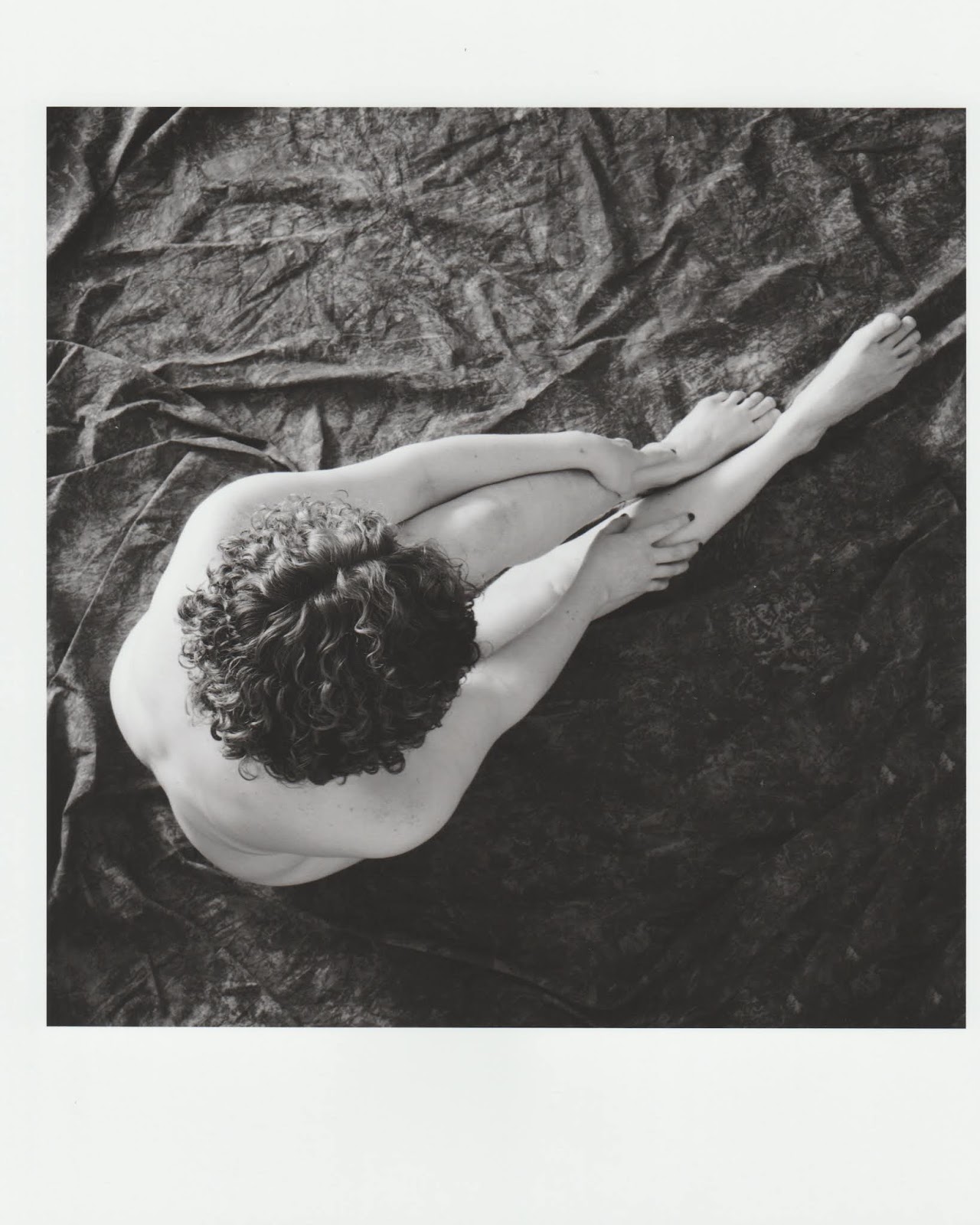
(Yes, that's me and also yes, I am naked in this picture.) 

Monday, July 23, 2018

"In this age of 'Me, Too'"


(Warning: I’m mad as hell, and I swear in this entry. I could apologize, but I’m not actually sorry, so.)

I keep hearing people say things like “In this age of #MeToo, men have to be so careful.” “Nowadays, men everywhere are looking over their shoulders, worried that they’ll be accused.” Afraid that they’ll be the next Harvey Weinstein, Mario Batali, Israel Horovitz, Garrison Keillor, Matt Lauer, Charlie Rose, Al Franken, Louis C.K., Jeffrey Tambor, Kevin Spacey, Bill Cosby, Roy Moore, Donald Trump. (ad infinitum)

No.

This is not some new time, when men have to be extra careful to not sexually harass women, to not get caught in their sexual misconduct. Men should have been this “careful” the whole damn time.

I am 12 years old, a child, leaning over a drinking fountain. A strange man says something to me about how I’m bent over. Says something leering about the shape my body makes as I lean forward to drink from a water fountain. I am almost 33 now, and I feel shadows of shame every single time I lean over in public. Careful to make it quick. Careful to tuck my pelvis so my ass isn’t on display to be commented on.

I hear people make jokes about it sometimes. Dismissing this "Me, too" uprising with that kind of benign misogyny that is insidious not because it rapes women behind dumpsters, but because it pays more attention to sports scores instead. Laughing when they accidentally bump up against you, their hands suddenly invasive. It's become a punchline for some, when unwanted touch comes up in conversation.

I am 23 years old, working for a vacuum company in the San Francisco Bay Area. It’s before morning meeting, and Carlos is at the white board with a marker. He’s drawn a big bed, and labeled the stick figures in it. “Hot bitch.” “Hotter bitch.” “Carlos.” The words “LAST NIGHT” are scrawled across the top. He draws squiggles to indicate the movement of these characters, making obscene noises to accompany his obscene gestures, then sits down next to me. When he catches me shaking my head, he grabs my knee. “You know what I’m talking about, Liz! That shit is hot!” I smile at him briefly, that careful smile so many of us women have perfected. The one that is polite, but closed off. The one that carefully smooths over the moment and waits for it to pass. Eventually, he moves his hand away from my knee.

This narrative of women accusing powerful men of sexual misconduct in order to “take them down” doesn’t make sense to me. It never has. It’s based on two premises that are difficult for me to accept. That A, women are consistently listened to and believed when they make accusations of sexual assault and harassment, and B, that men are consistently held accountable for their actions. Because historically, until recently, neither of those things have been true.

I am 23 years old, sitting with co-workers on a break. Michael and I have kissed a few times in the last few days. He’s sitting now with his arm over the back of my seat, his hand dangling close to my breast. In order to move it away, I take his hand and compliment it’s shape. “They are nice hands,” he replies. “They should be here”—he hovers over my breast—“or here”—he starts to reach between my legs. I grab his hand to stop him. “No,” I say. “Why not?” he asks. “My body,” I say, “ My body, my rules.” Later, another co-worker tells me to not lead Michael on. “If you’re not going to fuck him, don’t lead him on.” He tells me to be careful about how I treat Michael, to be careful to not waste his time.

Women’s accusations are not often believed, and men are not often held accountable. Harvey Weinstein sexually harassed actress Ashley Judd in 1997, and eventually, the New York Times uncovered nearly three decades worth of allegations. Weinstein remained in place at the Weinstein Company until October of 2017. Bill Cosby raped women starting in the mid-1960s, and didn’t face trial or even suffer commercial consequences until 2015. Donald Trump has been accused of sexual assault and harassment by at least 15 women since the 1980s, and has been recorded bragging about assaults. And he’s the fucking President of the United States. Why be careful in the way you treat others, the way you cover up what you do? Why bother?

I am 27 years old, and exploring Rome by myself. A man at least twice my age stops me on the street to tell me that I’m very attractive. I use that smile again, the one that says, “I am nice. I don’t want any trouble. But let this moment pass.” He keeps talking. I move away. He follows me. He eventually tells me that we should sleep together on the last night of the year. I quickly walk away, move down the street. I’m freezing, but I take off my bright orange, easy-to-spot jacket, careful to disguise myself so the man doesn’t follow me.

Of course there have been cases where men have been falsely accused of rape. (Historically, in the United States, these have been predominantly men of color, and racism is a major factor in many of these cases.) But most studies show that only between 2% and 10% of rape accusations are false. Correction: Only between 2% and 10% of REPORTED rape accusations are false. There’s no way to know how many rapes go unreported. And that’s just rape—not assault, not groping, not catcalling, not solicitations, etc. So, if I were a man, I’d be careful about calling myself a victim in this situation.

As a woman, I am so careful. All the time. I carry my keys like a weapon. I lock my door as soon as I get into my car. I don’t lean over public drinking fountains too long. I get the keys to my apartment out before leaving the car, so there’s no fumbling at the front door. I don’t walk alone at night. I don’t leave drinks unattended. I fake phone calls and I smile that careful polite smile and I carry pepper spray and I text friends that I made it home safely. So careful. All the damn time.

Men. We are not asking you to be careful around us. That’s not what we’ve been asking. Not in the past, and not in this “age of #MeToo.” We are asking you to treat us as human beings, and we have been from the beginning. Here’s the best way to avoid being accused of sexual harassment or assault: don’t sexually harass or assault people. It’s that simple. Not sure how those things are defined? Do some damn research. Get online and google “consent.”

#MeToo is decades, centuries overdue. The widespread nature of sexual misconduct that we now see in the media is not new. It has always been this bad. Historically, it’s been worse. The thing that’s new is women saying, “ENOUGH.” We are saying "TIME’S UP." We will not allow this to keep happening. You cannot treat us as less than human anymore. We are tired of being careful around men. We would like to feel like people around them instead.

Monday, April 30, 2018

A love letter to live theatre in general, and to a recent production of Othello in particular

Part One: F*** Your Patriarchal Gender Roles Bulls***


The other day, I was sitting and chatting with a guy friend about my costume for Othello, and the topic of fishnets came up. And then he said, “I’ve worn fishnets onstage. Wait…I think I have…I don’t remember?”

And I love that theatre is a world in which men can’t remember whether they’ve ever worn fishnet tights onstage or not.

The theatre world probably has its share of toxic masculinity. But in my own personal experience, there isn’t much. Theatre is a world in which straight, cisgender men can wear fishnets and nail polish and high heels, and hug and touch each other, and show emotions, and kiss each other onstage without freaking the hell out about their masculine identity. And I know there are other worlds outside of theatre where this is true, but I love theatre for this reason.

Part Two: We Are Not Strumpets! 


In Othello, there’s this dramatic scene where (spoiler alert but come on people it’s 400 years old) Roderigo’s been murdered, and Cassio’s been stabbed, and Iago is trying to blame my character, Bianca, for all of it. Iago calls Bianca some version of the word “whore” almost a dozen times within a few short pages. That scene has always been really intense to act, both in rehearsal and performance.

But for some reason, during our third show, it just…really got to me. We didn’t do anything particularly different. Maybe the actor playing Iago got a little bit closer to me, or said a few of his lines more intensely. But there was just something else going on for me. All of Iago’s lines suddenly felt like all of the things the world seems to shout about women’s sexuality. “This is your fault. Your fault. You are bad. You are a whore. Your fault.” As a survivor of sexual assault, those are the words you hear the most loudly. “What were you wearing?” “How did you lead him on?” “This nice young man’s life is ruined because you reported this.” So much blame. It’s overwhelming.

At the end of that scene, Iago grabs my wrist and calls me strumpet (again), and I pull a knife on him and yell, “I am no strumpet! But of life as honest as you that thus abuse me!” In rehearsals, and in the first few shows, I would usually kind of fall apart on the second half of that line, dropping the knife and sort of collapsing into a breakdown. But on that Saturday night, all of the rage of millions of women screaming “ME TOO!” welled up inside me and I yelled my entire line at Iago, full of righteous anger, before throwing the dagger violently to his feet.

I had a director once say that acting isn’t therapy, but it sure can be therapeutic. I kept the Saturday night interpretation of that scene for the rest of the run, and every night, I felt like I got to yell “I AM NO STRUMPET” not only for myself, but on behalf of so so so many women.

I love that theatre creates these unexpected opportunities to do something meaningful for yourself and for others. I definitely don’t think people should intentionally use theatrical productions to work through their gunk—it doesn’t make for the best theatre, and it can get pretty selfish. But often, the gunk sort of gets worked through anyways, through the simple act of telling a story that you connect with. I love theatre for that.

Part Three: The Give and Take


I’m no good at small talk. Words like “mingling” and “networking” set my heart racing with nerves. Some of the most important things in my life are the relationships I have with other people, but I’m definitely more of an introvert than an extrovert. It often takes me a while to open up to new folks.

But theatre gives me a chance to form meaningful relationships with other people without the “mingling” or small talk. It allows me to connect both face-to-face and side-by-side with so many caring, funny, smart, perceptive, hard-working people. The process of putting a show together automatically creates so many opportunities to connect. There are conversations in dressing rooms and green rooms. And there’s the give and take onstage, learning to listen to and trust each other. I love theatre for that.

Part Four: What It All Comes Down To 


Look, I know the world is kind of a mess. I think that in some ways it always has been, and it’s very possible that it always will be. But we do the best we can to make things good in the world while we’re here. And if there’s one thing I believe deeply, it’s that empathy makes the world better. And if there’s another thing I believe deeply, it’s that live theatre is one of the best teachers of empathy in the world.

I believe that as an audience member. But I also believe that as a maker of theatre, too. Participating in a live theatre production keeps all of my empathy muscles alive and well. It validates empathy by letting go of damaging gender expectations. It lets me know what it is to walk in someone else’s shoes, and gives me chances to tell other people’s stories. It helps me let my walls down as I learn to trust my fellow actors.


There are so many reasons why I love theatre. So so so many. I’ve got several volumes worth of love letters to theatre stored up. But today, after the closing weekend of “Othello,” this is the love letter I wanted to write.

Monday, October 16, 2017

#MeToo


(Note: Much of this blog entry has been written with a focus on the sexual crimes men commit against women. I know that women also commit sexual crimes against men, and men against men, and women against women, etc. But it's the crimes that men commit against women that are most prevalent. I don't want to discount the very real experiences that men have as victims of sexual harassment and assault. I've tried to be somewhat inclusive in my language, but I do want to focus on the specific problems of men assaulting and harassing women.) 

It's been simultaneously heartbreaking and inspiring to see so many "#MeToo" statuses on social media over the past couple of days.

For those unfamiliar with the hashtag, on Sunday, in light of the Harvey Weinstein case, actress Alyssa Milano posted the idea on Twitter. She urged any women who had been sexually assaulted or harassed to simply post "Me too" on social media. She said, "If all the women who have been sexually harassed or assaulted wrote ‘Me too’ as a status, we might give people a sense of the magnitude of the problem."

I posted my own status, along with this story: Once, during my freshman year in college, a bunch of girls from my dorm building were all talking about the ways we'd been treated by men, strangers or otherwise. Finally, I said, "Well, heck, let's test the statistic. Apparently it's one in four women. Raise your hand if you've been sexually harassed or assaulted."

Every single woman in the room raised her hand.

There were twelve of us. We were all under age 20.

My own sexual assault was confusing to me at the time (and sometimes still is) because I was raised in a culture--both societal and religious--that placed absolutely zero emphasis on consent. Even within Mormonism, we don't talk about consent. We talk about "rules." There are things that you are and aren't "allowed" to do.

But just because you're "allowed" to do something, doesn't mean you want to. There's plenty of room for interpretation within the law of chastity. I can't tell you how many Mormon women I've talked to who did things (or let things be done to them) that they were uncomfortable with, simply because it wasn't "against the rules" so they didn't know how to say anything. There's this strange pressure to be "nice." You get into a situation and you think, "I don't think what he/I/we're doing is wrong. I don't want to do it, but I'll be selfless and avoid contention and just let it happen. Besides, I'm not one of those prude girls who don't know how to have fun!" All of these things set up a world in which women are voiceless, so that when something DOES "cross a line" or "break a rule," there's no precedent to speak up.

I'm infuriated and heartbroken at how many times I see "Me too" as I scroll through Facebook. At the same time, I'm filled with hope and inspiration for two things: that people can feel less alone and less shame, and that people WILL start to really understand the magnitude of the problem.

As I've read through the conversations that are happening everywhere, there are a few thoughts that I wanted to share. (Men, now is not the time to talk. Now is the time to listen, and then talk.)

For every "Me too" you see, there are millions unseen. 
It takes a great deal of courage to speak up. Survivors don't owe anyone anything. If they're ready to talk, they can talk. If not, they don't have to. Their journey of healing is their own. But this also means that there are probably a lot of people who HAVE been sexually assaulted or harassed who haven't posted. And those only include those who have internet access, which is less than half the world's population.

The statistic is insane because men tend to assault/harass multiple women. 
I've heard some men express disbelief at how many women claim to have been sexually assaulted or harassed. "Surely there aren't that many terrible men!" Well, there aren't. Statistically, most men DON'T sexually harass or assault women. But those who DO, do so multiple times to multiple women. If 1 in 4 women are sexually assaulted/harassed, it doesn't mean that 1 in 4 men are sexually assaulting/harassing. It means that a small percentage of men are sexually assaulting/harassing multiple women. A study from 2002 found that of college men interviewed, "only" 6% had attempted or completed rape. WHICH IS STILL TOO HIGH OF A NUMBER. But among those 6%, they had each been responsible for an average of 6 rapes/attempted rapes.

So already, if that's 6 men out of every 100, they're responsible for a minimum of 36 rapes/attempted rapes. And this statistic doesn't include any other form of assault or harassment, including groping, sexual comments, online harassment, etc.

Men, we know it's not all of you. But you're Schrodinger's Rapist.
I'm sure women would love to live in a world where we could assume every man around us was safe. Most of us adore the men in our lives, trust them, and know that they're good men. But when we meet someone new, we have no way of knowing if that man is going to try and harm us or not. Until he proves otherwise, we just have to assume he's dangerous. So don't take it personally if we don't immediately trust you, boys. Don't try to convince us that you're one of the good ones. Trust our sense of personal safety and show us that you're one of the good ones. (This article is a brilliant, more in-depth explanation of this idea.)

Men, you may not be aware of the problem, because men don't always assault or harass in front of other men. 
Men, you may have opportunities to speak up against harassment and assault that you witness. But the reality is, you're probably not going to be there when it happens. Men who are assaulting or harassing women do so when women are more vulnerable--AKA away from other people, and away from other men. (More great reading on this phenomenon here.) Be aware of this. Just because you don't personally see it, doesn't mean it doesn't happen.

We need to face the reality of how harassment and assault look 
I think a lot of men (and a lot of women) have this idea in their heads of what "rape" looks like. A woman is walking alone to her car or apartment, and a stranger with a knife jumps out of the bushes and violently assaults her. While this does happen, it's far less common. More commonly, we are raped and harassed and assaulted by our friends. By our boyfriends. By our husbands. By our bosses. By our neighbors. When you realize that, you're much more aware of the potential dangers around you.

Harassment and assault are all part of the same pyramid
There are some who say that "harassment" isn't that big of a deal. That we shouldn't put it in the same category as "assault." I'm not going to argue about who deserves compassion for their experiences. I'm here to say that both harassment and assault are symptoms of the same problem. They're both evidence of a lack of empathy and a disregard for consent. Check this out:

If we want to change the violent crimes at the top of the pyramid, we also have to address the issues at the bottom.

So how do we change things? Here are some ideas:

Emphasize consent
This goes for all activities for all ages. If your kid doesn't want to give you a hug, don't make them hug you. If a friend doesn't like to be touched, don't touch them. Don't take it personally. Allow people to set their own boundaries. When teaching youth about sexuality, emphasize that they must always always respect someone else's boundaries.

I worry sometimes that a lack of conversation around consent creates situations where someone doesn't KNOW they're assaulting or harassing. Because people sometimes don't know how to say "no," there are people out there who have just assumed that everything was okay, and unknowingly caused enormous pain. I don't blame these "accidental perpetrators"--they are victims of the system, too, in their own way. But I can still show compassion for their unintended victims. And I can still be an advocate for these conversations.

Finally, don't teach that boys are evil sex monsters "who only want one thing" and don't teach that girls are chaste vessels who are responsible for guarding their virtue. Almost everyone has sexual thoughts and feelings. Those thoughts and feelings are the responsibility of the one experiencing them, and no one else.

Emphasize communication
Even for those of us who got sex ed beyond "this is how babies are made" and "don't have sex," most of us didn't get many communication skills. Even if we WANT to say "no" or "stop" or "I don't like that," we don't always know how. I'm a big fan of the "red light/green light" system. Red light means "stop, don't take it personally, no questions asked" and "green light" means "yes, continue this." Quite often, you can tell from body language and other cues whether or not someone is into something. But if you're not sure, you can stop and ask. And it can still be sexy and fun to ask. Sometimes we think something like a first kiss is way more exciting if you don't say anything. But you can say, "I want to kiss you," or "If I kissed you, would you kiss me back?" which is kinda hot, and also let's the other person know what you're thinking, and also gives them a choice as to how to respond.

And here's the other bonus: People like and dislike different things. Just because one person liked the way you kissed their jaw doesn't mean someone else will. If a magazine tells you, "Try this--women LOVE it," don't believe it. Because here's the secret: ALL OF US ARE DIFFERENT. And the cool thing about communication about what's going on is that consent is automatically built into the conversation.

Ask "If I was dangerous, would this person be safe?" 
This is an especially good thing for men to ask themselves, but it can go for anyone. Could the person you are with "escape" if they needed to? Is there a power dynamic going on? If you are unknowingly "endangering" this person, or if there's anything about your circumstances that might make someone uncomfortable, do what you can to make sure they feel safe.

Call it out when you see it
Did the person next to you cat-call a woman walking by? Say, "Hey, that's not cool, man." Is a woman experiencing unwanted attention from a stranger on a bus? Intervene by sitting next to the stranger and engaging him or the woman in conversation instead. Is one of the guys on the team being picked on in the locker room? Defend him. Call out rape culture in books, movies, TV shows, plays. Listen to and believe victims. Don't laugh at the seemingly small experiences women have...they pile up.


It feels like all of the women (and men) who are posting about sexual harassment and assault on social media are really saying, "I'm mighty tired of carrying this." And the women (and men) around them are replying with a resounding, "Me too."